
Results
-
 £59.77
We Seven (Brass Band) Derek Jenkins
We Seven, the title of this work, comes from a book by the same name written by the United States's first astronauts. The composer writes: 'In 1959, the United States entered the space race by starting a programme whose main aims included sending a solo astronaut into space and recovering him safely. Project Mercury, as this programme was so called, recruited the first seven American astronauts and successfully sent six of them into space. These men were Scott Carpenter, Gordon Cooper, John Glenn, Gus Grissom, Wally Schirra, Alan Shepard, and Deke Slayton, and collectively they became known as the 'Mercury Seven.' Through their efforts and those of countless others, the United States Space Program accomplished much with these six flights, including successfully sending an astronaut into space, putting a man in orbit, and keeping him up there for more than 24 hours. In 1962, shortly after Glenn and Carpenter's orbital flights, the 'Mercury Seven' co-wrote the book We Seven and throughout it, the astronauts discuss the events leading from their selection into the programme up through Carpenter's flight in May of 1962. The primary material for the work comes from two sources: the use of musical cryptograms to encode the astronauts names and initials into pitches and the aria 'Un bel di vedremo' from Giacomo Puccini's opera, Madame Butterfly. The inclusion of the latter comes directly from one of Glenn's chapters in the book. Together with a couple of the other astronauts, he would often listen to the opera to unwind from a long day of training. I would like to think that as he was orbiting the Earth that this opera, particularly this aria, would be running through his mind.' This work commemorates the Project Mercury on the 50th anniversary of its conclusion and was written for Joseph Parisi and the University of Missouri-Kansas City Wind Ensemble. This version for brass band has been prepared by the composer for the Fountain City Brass Band. To view a video of Fountain City Brass Band performing the work please visit: www.youtube.com/watch?v=yD3sBWhGkOo Sheet music available from: UK - www.brassband.co.uk USA - www.solidbrassmusic.com Difficulty Level: 1st Section + Instrumentation: 1 Soprano Cornet (Eb) 9 Cornets (Bb) [Both 3rd Cornets double Crystal Glasses] 1 Flugelhorn 3 Tenor Horns (Eb) [2nd Horn doubles Crystal Glasses] 2 Baritones (Bb) 2 Trombones (Bb) 1 Bass Trombone 2 Euphoniums (Bb) 2 Basses (Eb) 2 Basses (Bb) 4 Percussion
In Stock: Estimated dispatch 1-3 working days
-
 £82.19
All Tuned Up - 120 Famous Tunes for All Occasions (Brass Band Set - A5) PDFs
This unique new resource from BrookWright Music will be an essential part of every band's library! All Tuned Up is designed to cater for ensembles for occasions throughout the year. Tunes are drawn from genres including Classical, Hymns, Folk and Patriotic amongst many others to form a comprehensive book that will cover a wide variety of events such as Weddings, Funerals, Graduation Ceremonies, Parties, Proms, Remembrance, Street Playing and Thanksgiving. Playable by as few as five players but also designed to work for full brass band or wind band, it features flexible parts in a wide variety of transpositions. These excellent arrangements have been expertly created by Andrew Wainwright, David E. Jones, Dean H. Jones and Steven Ponsford. The general harmonic format of All Tuned Up is in five parts, although additional notes have been included to thicken the harmony where more players are available. Therefore, the book will work equally well with larger groups, including full brass bands and wind bands. To view a promotional video please visit www.youtube.com/watch?v=nmodRrXQRRs At the end of the Part 1 Bb book are four a capela tunes for Remembrance/Memorial occasions. This PDF download is for International sizes: Full Score - A4 Size - 297mm x 210mm Band Parts - A5 Size - 210mm x 148mm Physical copies of the books available from: UK - Individual Books Full Set Brass Band Set USA - www.solidbrassmusic.com/product/all-tuned-up-ensemble-books The Brass Band set includes: Full Score Part 1 Eb (optional) - Soprano Cornet Eb Part 1 Bb - Cornet Bb, Flugel Part 2 Bb - Cornet Bb, Flugel Part 2 Eb - Tenor Horn Part 3 Bb - Baritone, Trombone, Euphonium Part 3 Eb - Tenor Horn Part 4 Bb - Euphonium, Baritone Part 5 C (Bass Clef) - Bass Trombone Part 5 Eb - Bass Eb Part 5 Bb - Bass Bb Percussion (optional) - Various
In Stock: Estimated dispatch 1-3 working days
-
£82.19
All Tuned Up - 120 Famous Tunes for All Occasions (Brass Band Set-US Sizes) PDFs
This unique new resource from BrookWright Music will be an essential part of every band's library! All Tuned Up is designed to cater for ensembles for occasions throughout the year. Tunes are drawn from genres including Classical, Hymns, Folk and Patriotic amongst many others to form a comprehensive book that will cover a wide variety of events such as Weddings, Funerals, Graduation Ceremonies, Parties, Proms, Remembrance, Street Playing and Thanksgiving. Playable by as few as five players but also designed to work for full brass band or wind band, it features flexible parts in a wide variety of transpositions. These excellent arrangements have been expertly created by Andrew Wainwright, David E. Jones, Dean H. Jones and Steven Ponsford. The general harmonic format of All Tuned Up is in five parts, although additional notes have been included to thicken the harmony where more players are available. Therefore, the book will work equally well with larger groups, including full brass bands and wind bands. To view a promotional video please visit www.youtube.com/watch?v=nmodRrXQRRs At the end of the Part 1 Bb book are four a capela tunes for Remembrance/Memorial occasions. This PDF download is for US sizes: Full Score - Letter Size - 11" x 8.5" Band Parts - 7" x 5" Physical copies of the books available from: UK - Individual Books Full Set Brass Band Set USA - www.solidbrassmusic.com/product/all-tuned-up-ensemble-books The Brass Band set includes: Full Score Part 1 Eb (optional) - Soprano Cornet Eb Part 1 Bb - Cornet Bb, Flugel Part 2 Bb - Cornet Bb, Flugel Part 2 Eb - Tenor Horn Part 3 Bb - Baritone, Trombone, Euphonium Part 3 Eb - Tenor Horn Part 4 Bb - Euphonium, Baritone Part 5 C (Bass Clef) - Bass Trombone Part 5 Eb - Bass Eb Part 5 Bb - Bass Bb Percussion (optional) - Various
In Stock: Estimated dispatch 1-3 working days
-
 £19.99
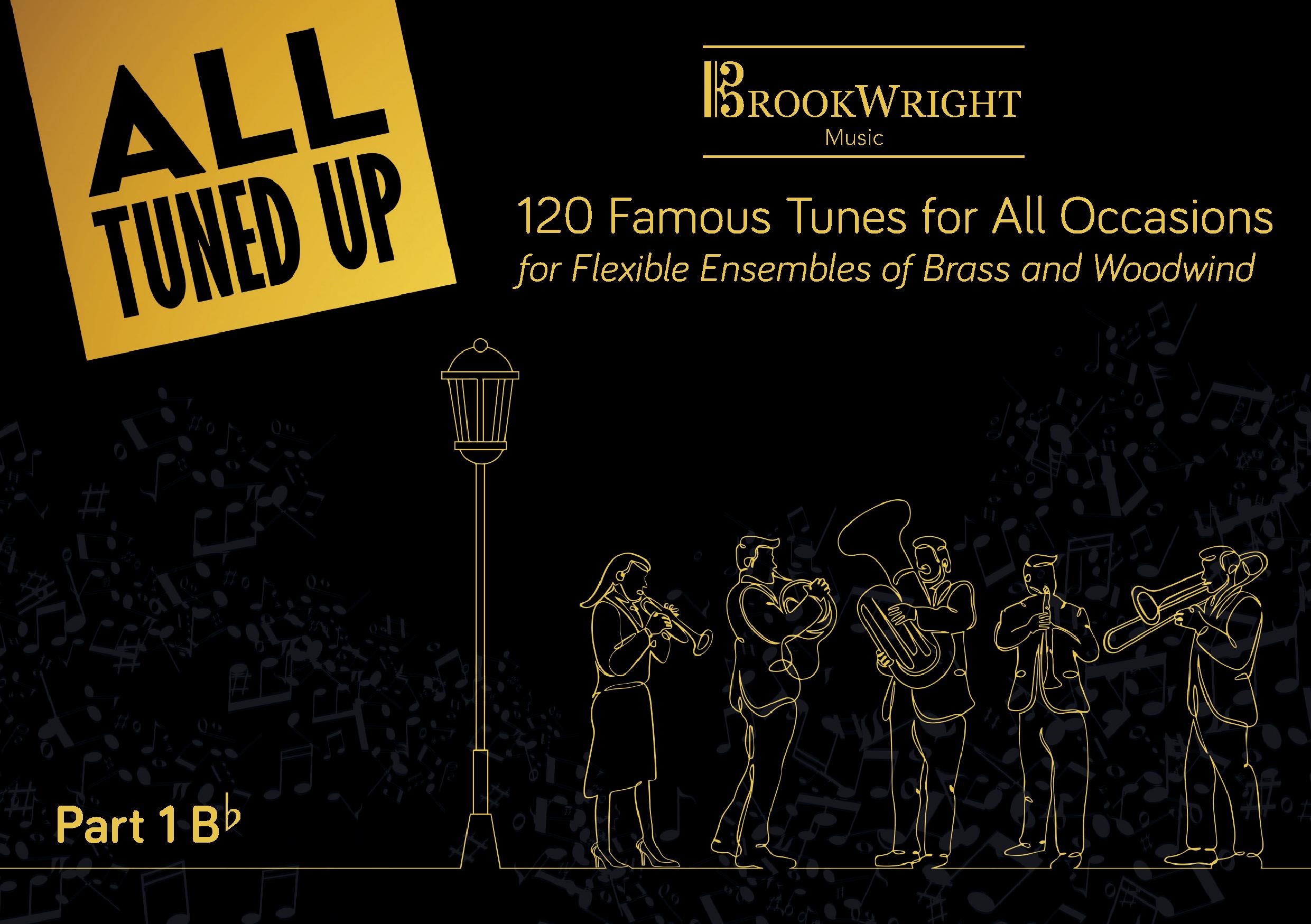
All Tuned Up - A4 Size Parts
120 Famous Tunes for All Occasions for Flexible Ensembles of Brass and WoodwindAll Tuned Up is designed to cater for ensembles for occasions throughout the year. Tunes are drawn from genres including Classical, Hymns, Folk and Patriotic amongst many others to form a comprehensive book that will cover a wide variety of events such as Weddings, Funerals, Graduation Ceremonies, Parties, Proms, Remembrance, Street Playing and Thanksgiving.Playable by as few as five players but also designed to work for full brass band or wind band, it features flexible parts in a wide variety of transpositions. These excellent arrangements have been expertly created by Andrew Wainwright, David E. Jones, Dean H. Jones and Steven Ponsford.The general harmonic format of All Tuned Up is in five parts, although additional notes have been included to thicken the harmony where more players are available. Therefore, the book will work equally well with larger groups, including full brass bands and wind bands.The following parts are available (in both A4 and Marchcard sizes):Part 1 in Bb: Cornet/Trumpet, Clarinet, Flugel Horn, Soprano SaxophonePart 1 in C: Piccolo, Flute, OboePart 1 in Eb (optional part): Soprano Cornet/Eb Trumpet, Eb ClarinetPart 2 in Bb: Cornet/Trumpet, Clarinet, Flugel HornPart 2 in Eb: Tenor Horn, Alto Saxophone, Alto ClarinetPart 2 in F: French Horn, Cor AnglaisPart 3 in Bb: Baritone TC, Trombone TC, Euphonium TC, Tenor SaxophonePart 3 in C BC: Baritone BC, Trombone BC, Euphonium BCPart 3 in Eb: Tenor Horn, Alto Saxophone, Alto ClarinetPart 3 in F: French Horn, Cor AnglaisPart 4 in Bb: Euphonium TC, Baritone TC, Tenor SaxophonePart 4 in C BC: Euphonium BC, Baritone BC, BassoonPart 5 in Bb: Bb Bass, Bass ClarinetPart 5 in C BC: Tuba, Bassoon, String BassPart 5 in Eb: Eb Bass, Baritone SaxophonePercussion (optional part)
Estimated dispatch 7-14 working days
-
 £39.99
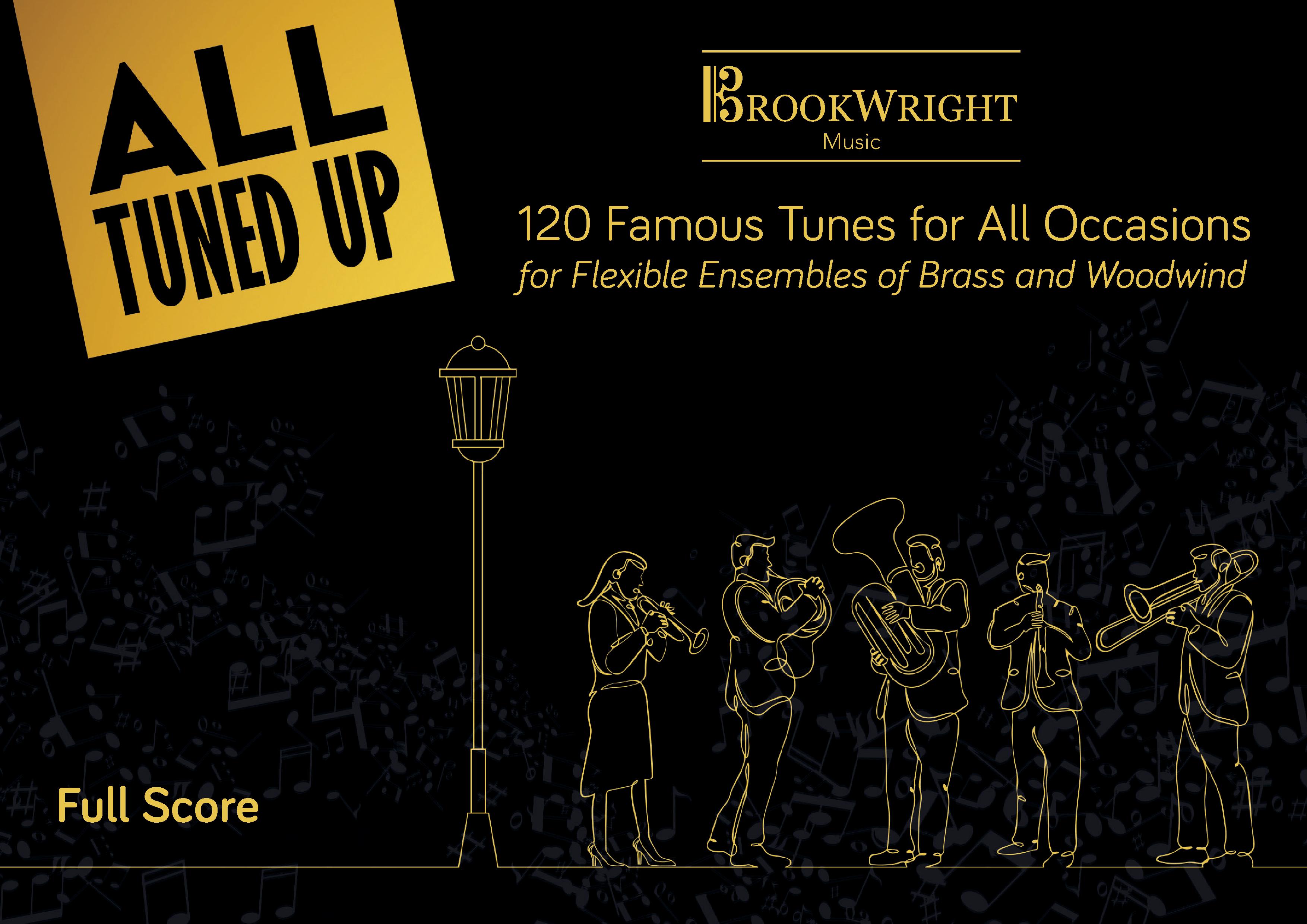
All Tuned Up - Full Score
120 Famous Tunes for All Occasions for Flexible Ensembles of Brass and WoodwindAll Tuned Up is designed to cater for ensembles for occasions throughout the year. Tunes are drawn from genres including Classical, Hymns, Folk and Patriotic amongst many others to form a comprehensive book that will cover a wide variety of events such as Weddings, Funerals, Graduation Ceremonies, Parties, Proms, Remembrance, Street Playing and Thanksgiving.Playable by as few as five players but also designed to work for full brass band or wind band, it features flexible parts in a wide variety of transpositions. These excellent arrangements have been expertly created by Andrew Wainwright, David E. Jones, Dean H. Jones and Steven Ponsford.The general harmonic format of All Tuned Up is in five parts, although additional notes have been included to thicken the harmony where more players are available. Therefore, the book will work equally well with larger groups, including full brass bands and wind bands.The following parts are available (in both A4 and Marchcard sizes):Part 1 in Bb: Cornet/Trumpet, Clarinet, Flugel Horn, Soprano SaxophonePart 1 in C: Piccolo, Flute, OboePart 1 in Eb (optional part): Soprano Cornet/Eb Trumpet, Eb ClarinetPart 2 in Bb: Cornet/Trumpet, Clarinet, Flugel HornPart 2 in Eb: Tenor Horn, Alto Saxophone, Alto ClarinetPart 2 in F: French Horn, Cor AnglaisPart 3 in Bb: Baritone TC, Trombone TC, Euphonium TC, Tenor SaxophonePart 3 in C BC: Baritone BC, Trombone BC, Euphonium BCPart 3 in Eb: Tenor Horn, Alto Saxophone, Alto ClarinetPart 3 in F: French Horn, Cor AnglaisPart 4 in Bb: Euphonium TC, Baritone TC, Tenor SaxophonePart 4 in C BC: Euphonium BC, Baritone BC, BassoonPart 5 in Bb: Bb Bass, Bass ClarinetPart 5 in C BC: Tuba, Bassoon, String BassPart 5 in Eb: Eb Bass, Baritone SaxophonePercussion (optional part)
Estimated dispatch 7-14 working days
-
£14.99
All Tuned Up - Marchcard Size Parts
120 Famous Tunes for All Occasions for Flexible Ensembles of Brass and WoodwindAll Tuned Up is designed to cater for ensembles for occasions throughout the year. Tunes are drawn from genres including Classical, Hymns, Folk and Patriotic amongst many others to form a comprehensive book that will cover a wide variety of events such as Weddings, Funerals, Graduation Ceremonies, Parties, Proms, Remembrance, Street Playing and Thanksgiving.Playable by as few as five players but also designed to work for full brass band or wind band, it features flexible parts in a wide variety of transpositions. These excellent arrangements have been expertly created by Andrew Wainwright, David E. Jones, Dean H. Jones and Steven Ponsford.The general harmonic format of All Tuned Up is in five parts, although additional notes have been included to thicken the harmony where more players are available. Therefore, the book will work equally well with larger groups, including full brass bands and wind bands.The following parts are available (in both A4 and Marchcard sizes):Part 1 in Bb: Cornet/Trumpet, Clarinet, Flugel Horn, Soprano SaxophonePart 1 in C: Piccolo, Flute, OboePart 1 in Eb (optional part): Soprano Cornet/Eb Trumpet, Eb ClarinetPart 2 in Bb: Cornet/Trumpet, Clarinet, Flugel HornPart 2 in Eb: Tenor Horn, Alto Saxophone, Alto ClarinetPart 2 in F: French Horn, Cor AnglaisPart 3 in Bb: Baritone TC, Trombone TC, Euphonium TC, Tenor SaxophonePart 3 in C BC: Baritone BC, Trombone BC, Euphonium BCPart 3 in Eb: Tenor Horn, Alto Saxophone, Alto ClarinetPart 3 in F: French Horn, Cor AnglaisPart 4 in Bb: Euphonium TC, Baritone TC, Tenor SaxophonePart 4 in C BC: Euphonium BC, Baritone BC, BassoonPart 5 in Bb: Bb Bass, Bass ClarinetPart 5 in C BC: Tuba, Bassoon, String BassPart 5 in Eb: Eb Bass, Baritone SaxophonePercussion (optional part)
Estimated dispatch 7-14 working days
-
 £59.95
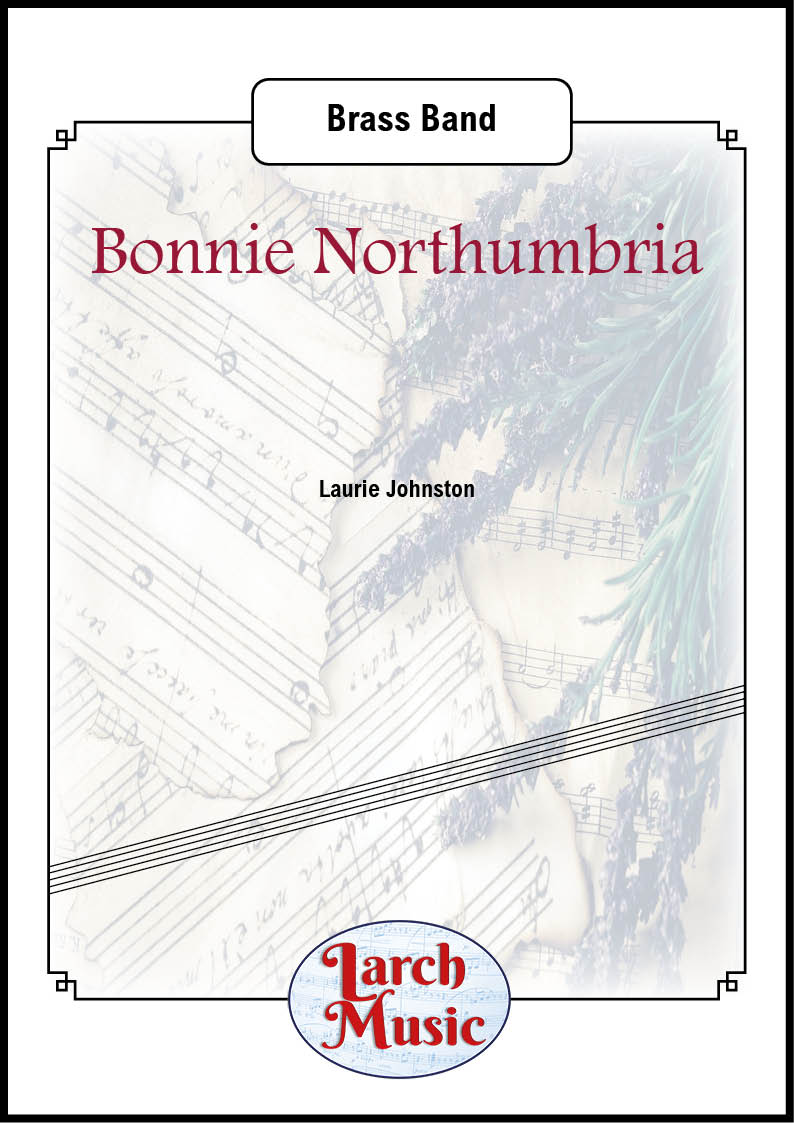
Bonnie Northumbria - Brass Band - LM786
COMPOSER: Laurie JohnstonProgramme NotesNorthumberland, or Northumbria as it is also known, is the most northern county in England and has magnificent and stunning landscapes just waiting to be explored. Filled with mystical castles, atmospheric ruins and historical sites and edged by spectacular coastal scenery, there is something wonderful to see at every turn. The Devils Causeway passes through Northumbria and reaches Berwick upon Tweed at the coast. Walkers and cyclists can also take the Coast and Castles Cycle Route or the North Sea Trail which journey through some of the most beautiful scenery along the way.The Blaydon Races is aGeordiefolk songwritten in the 19th century byGeordie Ridley, in a style deriving frommusic hall. It is regarded by many as the unofficialanthemofTynesideand is frequentlysungby supporters ofNewcastle United Football ClubandNewcastle Falconsrugby club.Blaydonis a small town inGateshead, situated about 4 miles (6.4km) fromNewcastle upon Tyne, inNorth East England. The race used to take place on the Stella Haugh 1 mile (1.6km) west of Blaydon.Stella South Power Station(demolished in 1995) was built on the site of the track in the early 1950s, after the races had stopped taking place in 1916.Water of Tyne (sometimes rendered as The Waters of Tyne) is a folk song (Roud number1364) from the north-east of England. The song is sung by a girl or woman lamenting the fact that her paramour is on the opposite bank of theRiver Tyne. Sleeve notes to Michael Hunt's recording of Tyneside songs states that "the ferry is believed to be that atHaughton Castleon theNorth Tyne". Alternatively the "rough river" in the last line may indicate a point further downstream, possiblyTynemouth.The song was collected byJohn Bellin 1810 and published two years later inRhymes of Northern Bards.The Keel Row is a traditional Tyneside folk song evoking the life and work of thekeelmenofNewcastle upon Tyne. A closely related song was first published in aScottishcollection of the 1770s, but may be considerably older, and it is unclear whether the tune is Scottish or English in origin.The opening lines of the song set it inSandgate, that part of the quayside overlooking the River Tyne to the east of the city centre where the keelmen lived and which is still overlooked by theKeelmen's Hospital.Versions of the song appear in both England and Scotland, with Scottish versions referring tothe Canongaterather than Sandgate. The earliest printing was in the 1770s inEdinburghin A Collection of Favourite Scots Tunes, edited by Charles Maclean, though the tune was also found in several late eighteenth-century English manuscript collections. As the term "keel" was used both sides of the border, it has not been determined which version was the original, althoughFrank Kidsonsurmised that like many other songs collected by Maclean it may originally have been aJacobiteair from the time of the1745 rebellion. Some versions of the song make reference to a "blue bonnet[...] with a snowy rose upon it", a clear attempt to evoke Jacobite symbolism, whether dating from 1745 or not.Kidson, however, also noted that he had found the tune of The Keel Row associated with an early dance called "The Yorkshire Lad" as early as 1748.By the 19th century the tune was well associated with the River Tyne; a few years before the 1850s the keelmen had met yearly to celebrate the founding of the Keelmen's Hospital, perambulating the town to the accompaniment of bands playing The Keel Row.Dance To Thy Daddyis a traditional Englishfolksong, originating inNorth East England. An early source for the lyrics, Joseph Robson's "Songs of the bards of the Tyne", published 1849, can be found on the Farne archive. In Farne's notes to the song, it is stated that these lyrics were written by William Watson around 1826.
In Stock: Estimated dispatch 3-5 working days
-
 £5.99
£5.99Scripture-based Songs Compilation Folio Books
No. of TuneTitleRefernece1Above all powersSpring Harvest Song Book 2003, 12All for theeThe Musical Salvationist, January 19763All Heaven declaresMagnify, 24All the world is waitingThe Musical Salvationist, April 19875As we are gatheredThe Source, 296Be bold, be strongThe Source,387Be still for the presence of the LordMagnify, 78Beauty for brokennessThe Source,379Blessd be the name of the LordThe Source,5310Breathe 11By his handSing to the Lord, Vol.1, Part 112Come, now is the time to worshipThe Source, 66213Come on and celebrate!The Source, 7514Come, thou Fount of every blessing (Nettleton)Salvation Army Song Book, 31315ContentmentHappiness & Harmony, 1416Crown him with many crowns (Diademata)Salvation Army Song Book, 15617Cwm RhonddaSalvation Army Song Book, 57818Do something beautifulSing to the Lord Children's Voices Series, Vol.1219Faithful GodThe Source, 8820Father, we love youHappiness & Harmony, 1621Give thanks with a grateful heartThe Source, 1822Glorious things of thee are spoken (Abbot's Leigh)Salvation Army Song Book, 15723God in youSing to the Lord, Vol.9, Part 224Great is the darkness (Come, Lord Jesus)Magnify, 1425He is ableSing to the Lord Children's Voices Series, Vol.1526He is the Lord (Show your power)Magnify, 1927Healing ChristSing to the Lord, Vol.6, Part 328Here am I, my LordThe Musical Salvationist, July 199129His ProvisionThe Musical Salvationist, July 198530Holy, holy, holy is the LordSongs of Fellowship, 18231HosannaThe Source, 18232How deep the Father's love for usThe Source, 185; Songs of Fellowship II, 78033I am a new creationThe Source, 19134I dare to be differentSing to the Lord, Vol.1, Part 135I love you, LordMagnify, 2436I will run to you (Your eye is on the sparrow)The Source, 109337In Christ aloneThe Source, 131138In his presenceSing to the Lord, Vol.9, Part 339In his time 40In Jesus' nameSing to the Lord, Vol.13, Part 141In this quiet momentSing to the Lord, Vol.13, Part 342It is to youMagnify, 3043Jesus is Lord!The Source, 28444Jesus, name above all namesHappiness & Harmony, 3245Joyful, Joyful (Europe)Salvation Army Song Book, 1046King of Kings, MajestyThe Source, 30947Knowing You (All I once held dear)Magnify, 348Light of the world (Here I am to worship)Sing to the Lord Children's Voices Series, Vol.1049Lord, I lift your name on highMagnify, 3850Lord, you know that we love youThe Musical Salvationist, April 198351Love Divine (Blaenwern)Salvation Army Song Book, 43852MajestyHappiness & Harmony, 4553My Lord and Christ!Sing to the Lord, Vol.2, Part 254My Lord, what love is thisThe Source, 37055My Saviour's love (I stand amazed)Salvation Army Song Book, 17956Nothing but thy bloodSing to the Lord Children's Voices Series, Vol.1357O God of burning, cleansing flame (Send the fire)Salvation Army Song Book, 20358O happy daySalvation Army Song Book, 36559Oh to see the dawn (The power of the cross)Spring Harvest Song Book 2005, 6760Only by graceMagnify, 4861Power of your love (Lord, I come to you)Magnify, 3762Praise, my soulSalvation Army Song Book, 1763Praise to the Lord (Lobe den Herren)Salvation Army Song Book, 1964Regent SquareSalvation Army Song Book, 14765Rejoice!The Source, 43866Shout to the Lord (My Jesus, my Saviour)Magnify, 4367Sing and make musicHappiness & Harmony, 5568Spirit of the living GodSongs of Fellowship, 511; The Source, 46369Storm the forts of darknessSalvation Army Song Book, 69670Teach me to danceThe Source, 46971The light has comeHappiness & Harmony, 6372The Potter's hand (Beautiful Lord, wonderful Saviour)The Source, 64073The servant King (From Heaven you came)The Source, 11474The splendour of the KingSpring Harvest Song Book 2005, 9775There is a redeemerMagnify, 5976To be in your presence (My Desire)Magnify, 6177To God be the gloryThe Musical Salvationist, April 198878Wake up, O sleeperSing to the Lord, Vol.6, Part 279We are marchingThe Source, 53980We have come into this placeHappiness & Harmony, 7381We want to see Jesus lifted highThe Source, 55982When the music fades (The heart of worship)Magnify, 7083Who is on the Lord's side? (Rachie)Salvation Army Song Book, 707
Estimated dispatch 7-14 working days
-
 £29.95
Scripture-based Songs Compilation Full Score
No. of TuneTitleRefernece1Above all powersSpring Harvest Song Book 2003, 12All for theeThe Musical Salvationist, January 19763All Heaven declaresMagnify, 24All the world is waitingThe Musical Salvationist, April 19875As we are gatheredThe Source, 296Be bold, be strongThe Source,387Be still for the presence of the LordMagnify, 78Beauty for brokennessThe Source,379Blessd be the name of the LordThe Source,5310Breathe 11By his handSing to the Lord, Vol.1, Part 112Come, now is the time to worshipThe Source, 66213Come on and celebrate!The Source, 7514Come, thou Fount of every blessing (Nettleton)Salvation Army Song Book, 31315ContentmentHappiness & Harmony, 1416Crown him with many crowns (Diademata)Salvation Army Song Book, 15617Cwm RhonddaSalvation Army Song Book, 57818Do something beautifulSing to the Lord Children's Voices Series, Vol.1219Faithful GodThe Source, 8820Father, we love youHappiness & Harmony, 1621Give thanks with a grateful heartThe Source, 1822Glorious things of thee are spoken (Abbot's Leigh)Salvation Army Song Book, 15723God in youSing to the Lord, Vol.9, Part 224Great is the darkness (Come, Lord Jesus)Magnify, 1425He is ableSing to the Lord Children's Voices Series, Vol.1526He is the Lord (Show your power)Magnify, 1927Healing ChristSing to the Lord, Vol.6, Part 328Here am I, my LordThe Musical Salvationist, July 199129His ProvisionThe Musical Salvationist, July 198530Holy, holy, holy is the LordSongs of Fellowship, 18231HosannaThe Source, 18232How deep the Father's love for usThe Source, 185; Songs of Fellowship II, 78033I am a new creationThe Source, 19134I dare to be differentSing to the Lord, Vol.1, Part 135I love you, LordMagnify, 2436I will run to you (Your eye is on the sparrow)The Source, 109337In Christ aloneThe Source, 131138In his presenceSing to the Lord, Vol.9, Part 339In his time 40In Jesus' nameSing to the Lord, Vol.13, Part 141In this quiet momentSing to the Lord, Vol.13, Part 342It is to youMagnify, 3043Jesus is Lord!The Source, 28444Jesus, name above all namesHappiness & Harmony, 3245Joyful, Joyful (Europe)Salvation Army Song Book, 1046King of Kings, MajestyThe Source, 30947Knowing You (All I once held dear)Magnify, 348Light of the world (Here I am to worship)Sing to the Lord Children's Voices Series, Vol.1049Lord, I lift your name on highMagnify, 3850Lord, you know that we love youThe Musical Salvationist, April 198351Love Divine (Blaenwern)Salvation Army Song Book, 43852MajestyHappiness & Harmony, 4553My Lord and Christ!Sing to the Lord, Vol.2, Part 254My Lord, what love is thisThe Source, 37055My Saviour's love (I stand amazed)Salvation Army Song Book, 17956Nothing but thy bloodSing to the Lord Children's Voices Series, Vol.1357O God of burning, cleansing flame (Send the fire)Salvation Army Song Book, 20358O happy daySalvation Army Song Book, 36559Oh to see the dawn (The power of the cross)Spring Harvest Song Book 2005, 6760Only by graceMagnify, 4861Power of your love (Lord, I come to you)Magnify, 3762Praise, my soulSalvation Army Song Book, 1763Praise to the Lord (Lobe den Herren)Salvation Army Song Book, 1964Regent SquareSalvation Army Song Book, 14765Rejoice!The Source, 43866Shout to the Lord (My Jesus, my Saviour)Magnify, 4367Sing and make musicHappiness & Harmony, 5568Spirit of the living GodSongs of Fellowship, 511; The Source, 46369Storm the forts of darknessSalvation Army Song Book, 69670Teach me to danceThe Source, 46971The light has comeHappiness & Harmony, 6372The Potter's hand (Beautiful Lord, wonderful Saviour)The Source, 64073The servant King (From Heaven you came)The Source, 11474The splendour of the KingSpring Harvest Song Book 2005, 9775There is a redeemerMagnify, 5976To be in your presence (My Desire)Magnify, 6177To God be the gloryThe Musical Salvationist, April 198878Wake up, O sleeperSing to the Lord, Vol.6, Part 279We are marchingThe Source, 53980We have come into this placeHappiness & Harmony, 7381We want to see Jesus lifted highThe Source, 55982When the music fades (The heart of worship)Magnify, 7083Who is on the Lord's side? (Rachie)Salvation Army Song Book, 707
Estimated dispatch 7-14 working days
-
 £44.83
Boreas: The North Wind (Brass Band) Derek Jenkins
Boreas was an ancient Greek deity personifying the north wind. He was a winged god of ruthless disposition, which was rivaled only by the harsh wintry winds at his command. Boreas fell in love with Orithyia, the King's daughter. Contrary to his genuine nature, he attempted to woo her with sweet words of devotion. His efforts were in vain, and Orithyia failed to yield to his advances. With this rejection, Boreas's temper flared and he, once again, was overcome by his icy and merciless nature. Like Boreas, this work begins with slow, lyrical lines that quickly fade into an unrelenting fury of anger. Moments reminiscent of Boreas's words of affection appear, but they are quickly washed away as the piece escalates. This arrangement was written for Joseph Parisi and the Fountain City Brass Band as a small token of thanks. The original version for wind ensemble was commissioned by and written for Timothy Shade and the Bethel College Wind Ensemble. To view a video of Diamond Brass Band performing the work please visit: www.youtube.com/watch?v=Co4oreV7Hm4 Sheet music available from: UK - www.brassband.co.uk USA - www.solidbrassmusic.com Difficulty Level: 2nd Section + Instrumentation: 1 Soprano Cornet (Eb) 9 Cornets (Bb) 1 Flugelhorn 3 Tenor Horns (Eb) 2 Baritones (Bb) 2 Trombones (Bb) 1 Bass Trombone 2 Euphoniums (Bb) 2 Basses (Eb) 2 Basses (Bb) 4 Percussion
In Stock: Estimated dispatch 1-3 working days
